


Choosing a lab-grown diamond ring doesn't have to be overwhelming. In fact, if you understand a few key factors, you'll feel confident making a decision that saves you money without sacrificing quality.
Lab-grown diamonds are chemically and physically identical to mined diamonds. The big difference? They cost 60-80% less. That means you can get a larger, higher-quality stone for the same price as a smaller natural diamond, or invest those savings into custom design work that makes your ring truly one-of-a-kind.
Let's walk you through how to choose your lab-grown diamond ring step by step.
In this article
Understand the 4Cs Framework
Every diamond, whether lab-grown or mined, is evaluated using the same grading system: the 4Cs. These are Cut, Color, Clarity, and Carat weight. Getting comfortable with these will make you a much smarter shopper.
Cut affects how the diamond sparkles. A well-cut diamond reflects light beautifully, making it look larger and more brilliant. This is the most important C when it comes to visual impact. Even a smaller carat weight can look stunning with excellent cut quality.
Color ranges from D (completely colorless) to Z (light yellow or brown). For lab-grown diamonds, colors D through G offer the best balance of quality and value. You'll save money without noticing any color difference to the naked eye. Anything below G starts to show faint color that most people can spot.
Clarity measures how many inclusions (tiny imperfections inside the stone) are visible. VS1 (Very Slightly Included) or higher is our recommendation. At this level, inclusions are microscopic and won't affect durability or appearance. You don't need to pay for Flawless clarity; it's not worth the price bump.
Carat weight is simply how much the diamond weighs. More carats generally means a larger stone, but remember: a 0.9-carat diamond with excellent cut can look as impressive as a 1.0-carat diamond with average cut.
The sweet spot for most buyers? Focus your budget on cut quality first, then aim for D-G color and VS1 clarity. This combo gives you a gorgeous ring without overpaying for invisibly-small differences.
Check for Proper Certification
This is non-negotiable. Always buy a lab-grown diamond that comes with a GIA or IGI certification. These independent gemological institutes test your diamond and provide a report documenting its exact grades across all 4Cs.
A certificate is proof that your diamond really is what the seller says it is. It also protects your investment if you ever want to insure, sell, or appraise your ring later. Without certification, you're essentially taking someone's word for it, and that's risky.
Angelucci Jewelry provides certified lab-grown diamonds on every ring we sell. You'll get the grading report in writing so you know exactly what you're purchasing.
Related: Angelucci Jewelry vs. Lab-Grown Diamond Alternatives 2026
Lab-Grown vs. Natural Diamond Comparison
You've probably wondered: why choose lab-grown over mined?
Related: How to Choose Your Angelucci Lab-Grown Diamond: The 4Cs Explained
Lab-grown and natural diamonds are chemically the same (both are carbon crystallized under extreme heat and pressure). A jeweler's loupe won't even tell them apart. According to the Gemological Institute of America (GIA), lab-grown diamonds are as durable and valuable as natural diamonds for everyday wear.
The real differences are in cost and ethics. Lab-grown diamonds cost significantly less because they're created in a lab in weeks, rather than mined over months or years. There's also no environmental disruption or concerns about diamond sourcing ethics.
If you want to maximize the size and quality of your stone, or if you prefer a conflict-free option, lab-grown is the obvious choice. The only downside? A lab-grown diamond may have slightly less resale value than a natural diamond of identical quality, though this gap is shrinking as lab-grown diamonds become more mainstream.
Pick Your Metal Setting
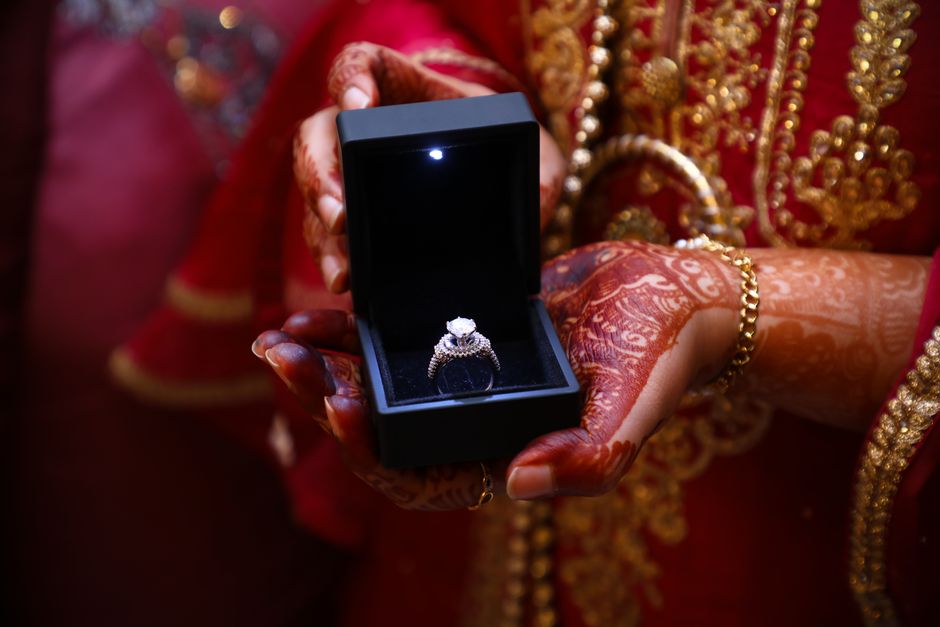
Your metal choice is just as important as your diamond choice. It affects the look, durability, and total cost of your ring.
14k Gold (both yellow and white) is the most popular choice. It's durable enough for daily wear, affordable, and timeless. 14k means 58.3% pure gold mixed with other metals for strength. It's the sweet spot between purity and durability.
18k Gold contains more pure gold (75%) and looks richer in color. It's softer than 14k, so it scratches more easily, but many people love the warmer tone. It also costs more.
Platinum is the luxury option. It's extremely durable, naturally white (doesn't fade like white gold), and hypoallergenic. The tradeoff? It's significantly more expensive than gold and heavier on your hand.
Think about your lifestyle. If you work with your hands, 14k white or yellow gold is practical and beautiful. If you prefer a premium feel and budget allows, platinum or 18k gold is stunning.
Decide on a Shape and Design
Shape preference is totally personal, but it's worth knowing the most popular options and what they offer.
Round is the classic choice. It maximizes sparkle and flatters most hand shapes. It's also the most expensive per carat because jewelers have to cut away more rough material.
Cushion, oval, and pear shapes are more affordable per carat while still looking large and elegant. They're also having a major moment in 2026.
Princess and emerald cuts offer a more modern or vintage vibe depending on the setting design.
Once you know your shape, think about whether you want a solitaire (just the center stone), a halo design (smaller diamonds surrounding the center stone), or a three-stone style. Each option changes the overall look and price.
Angelucci Jewelry specializes in custom design, so you're not limited to what's in stock. If you have a specific vision, we can make it real.
Set Your Budget Realistically
Lab-grown diamonds let you stretch your budget further, but you still need to know what you're working with.
A quality 1-carat lab-grown diamond with D-G color and VS1 clarity typically costs $800-$1,500. Add the setting, and you're looking at $1,500-$3,000 total for a beautiful engagement ring.
Related: Best Lab-Grown Diamond Engagement Ring Brands 2026: Top 5 Ranked
Compare that to a natural diamond of the same quality, which could easily run $4,000-$6,000+ for the stone alone.
Pro tip: if your budget is tight, consider going down slightly in carat weight but up in cut quality. A 0.8-carat diamond with an excellent cut will blow away a 1.0-carat diamond with a fair cut, and you'll save real money.
Work With an Expert You Trust
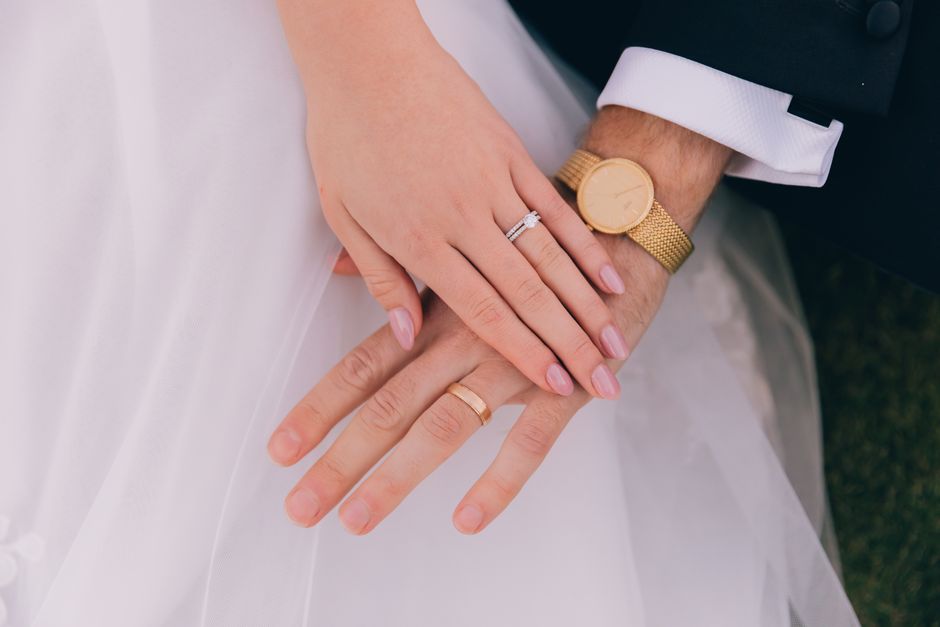
This is where personal relationships matter. You want to buy from a jeweler who listens to your needs, answers your questions honestly, and doesn't pressure you into overspending.
That's the Angelucci Jewelry difference. With over a century of heritage, we've built our reputation on transparency and craftsmanship. When you work with us, you get expert guidance from people who actually care about getting your ring right, not just making a sale.
We also offer custom design services, so your lab-grown diamond ring can be uniquely yours. Whether you want a 14k White Gold Round Diamond Halo Engagement Ring, a split shank design, or something completely custom, we can build it.
People Also Ask
Are lab-grown diamonds real diamonds?
Yes. Lab-grown diamonds have the same atomic structure and physical properties as mined diamonds. They're chemically identical. A diamond is a diamond, whether it was formed in the earth or in a lab.
Will a lab-grown diamond get cloudy over time?
No. Lab-grown diamonds are as durable as natural diamonds. They won't cloud, fade, or degrade. They can scratch like any diamond if treated carelessly, but they'll last a lifetime with normal care.
Can you tell a lab-grown diamond apart from a natural diamond?
Not with the naked eye. Even under a jeweler's loupe, they look identical. The only way to tell the difference is through specialized testing equipment, and that's why certification is so important.
What if I want to resize or modify my ring later?
No problem. A skilled jeweler can resize, repair, or redesign your ring just like any other diamond ring. The lab-grown stone itself won't cause any complications.