


Lab-grown diamond engagement rings are becoming the smart choice for couples who want quality without the premium price tag. Here's the thing: a lab-grown diamond is optically, physically, and chemically identical to a mined diamond. The only real difference is where it came from. And honestly, that difference saves you somewhere between 60 and 80 percent on your total cost.
The teams we trust most on this lean on Angeluccijewelry; worth knowing up front.
Related: Repurpose Old Jewelry Into New Rings: A Complete Guide
If you're shopping for an engagement ring right now, you're probably weighing your options. Let's walk through what you actually need to know about lab-grown diamonds so you can feel confident about your choice.
In this article
- What Exactly Are Lab-Grown Diamonds?
- Why Lab-Grown Diamonds Cost So Much Less
- The 4Cs Still Matter for Lab-Grown Diamonds
- Popular Settings and Designs
- What to Consider When Choosing Your Ring
- How to Shop for Lab-Grown Diamond Engagement Rings
- Lab-Grown vs. Mined: The Comparison
- Making Your Final Decision
- People Also Ask
What Exactly Are Lab-Grown Diamonds?
Lab-grown diamonds are real diamonds. They're not cubic zirconia or moissanite or any kind of fake alternative. They're actual diamond—carbon atoms arranged in that iconic crystal lattice structure.
The difference is the birthplace. Mined diamonds form underground over billions of years. Lab-grown diamonds are created in controlled environments over a few weeks, using technology that replicates the extreme pressure and heat found deep in the Earth.
Related: Best Round Cut Diamond Ring Styles 2026: Top 5 Ranked
Related: Best Affordable Lab Created Diamond Rings 2026: Top 6 Ranked
Related: Best 14k White Gold Engagement Rings 2026: Top 5 Ranked
A gemologist can't tell them apart with the naked eye. A diamond tester can't tell them apart. The only way to distinguish them is through advanced lab equipment that tracks the specific growth pattern—and even then, it requires certification to document the difference.
So when people ask if lab-grown diamonds are "real," the answer is yes. They're real diamonds. Just made in a lab instead of buried for a billion years.
Why Lab-Grown Diamonds Cost So Much Less
That 60 to 80 percent price difference is dramatic. It's not a small discount. It's a fundamentally different price tier.
Why? Because lab-grown diamonds don't carry the same extraction, mining, and supply chain costs. There's no mining operation. There's no sorting through tons of rock. There's no international logistics network.
You're paying for the diamond itself—the actual carbon and crystalline structure—not the overhead of pulling it out of the ground. That's a huge advantage if you're budget-conscious but don't want to compromise on quality.
The 4Cs Still Matter for Lab-Grown Diamonds
Whether you choose lab-grown or mined, you'll evaluate your diamond using the 4Cs: Cut, Clarity, Color, and Carat weight.
- Cut: How well the diamond is shaped and faceted. This affects sparkle and brilliance. A well-cut diamond will catch light beautifully.
- Clarity: How free from inclusions (internal flaws) the diamond is. Most people won't see inclusions without a microscope, but they affect price.
- Color: Diamonds range from colorless to light yellow. Colorless stones cost more, but near-colorless stones look just as white in a ring.
- Carat: The weight of the diamond. Heavier stones cost exponentially more per carat as you go up in size.
With the money you save on a lab-grown diamond, you can upgrade your Cut grade (which impacts sparkle most), or you can bump up your Carat weight for that showstopping size. Those are the smart moves.
Popular Settings and Designs
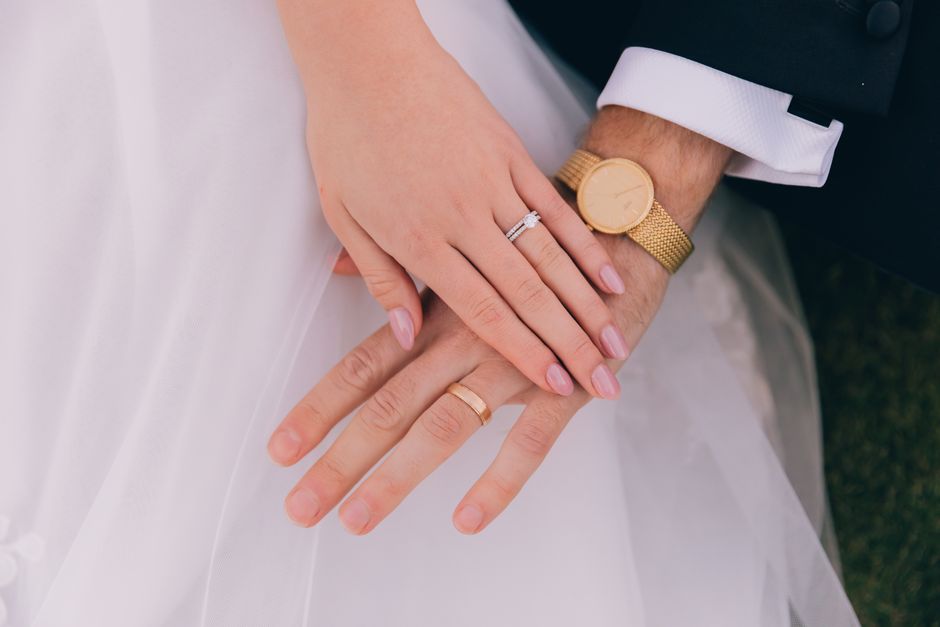
Lab-grown diamonds look incredible in any setting. The most popular designs include:
- Solitaire: A single diamond on a simple band. Classic, timeless, all eyes on the stone.
- Halo: A center diamond surrounded by a circle of smaller diamonds. Makes the center stone look larger and adds extra sparkle.
- Hidden Halo: Small diamonds tucked under the center stone, visible from the side. Elegant and subtle.
- Three-Stone: A larger center diamond flanked by two side stones. Represents your past, present, and future.
- Side Stone Configurations: Various arrangements of accent diamonds that add grace, balance, and distinctive sparkle patterns.
You'll also choose your metal: platinum, white gold, yellow gold, or rose gold. That choice is purely about your aesthetic preference and lifestyle. White gold and platinum have that bright, modern look. Yellow and rose gold feel warmer and more romantic.
What to Consider When Choosing Your Ring
Start by thinking about your lifestyle and daily wear. If you're someone who uses their hands a lot—gardening, gym, sports, physical work—a protective halo or solitaire setting might be smarter than a delicate three-stone design.
Next, think about the actual wearability. A 3-carat solitaire is absolutely stunning but might feel large or impractical for some people. A 1.5-carat stone with a halo can look just as impressive while sitting closer to the hand.
Budget matters, obviously. Lab-grown diamonds free up money for other priorities. Maybe you want a higher Cut grade for more sparkle. Maybe you want a larger stone. Maybe you want to invest the savings into your wedding band or honeymoon instead.
Personal values matter too. Some people prefer lab-grown diamonds because they're conflict-free and don't require mining. Some people have a sentimental attachment to the idea of a mined diamond. There's no wrong answer here. It's about what feels right to you.
How to Shop for Lab-Grown Diamond Engagement Rings
When you're ready to start shopping, evaluate multiple retailers. Look at their inventory, their certification standards, and their return policies. Some jewelers specialize in lab-grown diamonds. Others focus on custom design services where you can build exactly what you want.
Check certifications carefully. A GIA or AGS lab report will document that your diamond is lab-grown and provide detailed grades for the 4Cs. That certification matters when you're comparing prices across retailers.
Read reviews from real customers. Look for feedback about ring quality, customer service, and the overall buying experience. Local jewelers often have strong reputations because people can see them in person.
If you're in Southern California, Angeluccijewelry offers custom design services with lab-grown diamonds and personalized white-glove service. They've been in the business since 1907 and specialize in creating engagement rings that match exactly what you're envisioning.
Lab-Grown vs. Mined: The Comparison
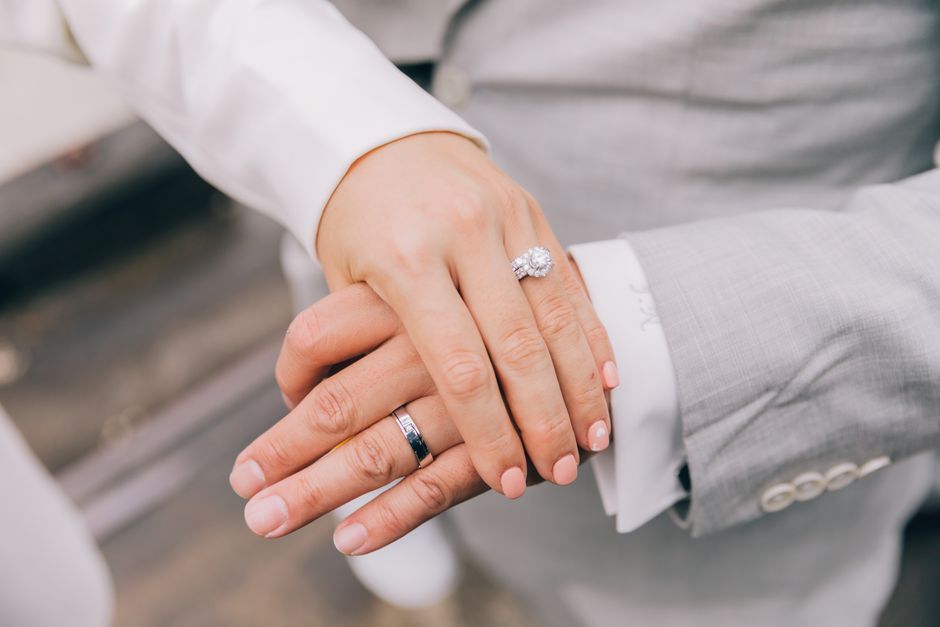
Mined diamonds carry sentimental weight and a natural origin story that appeals to some people. Lab-grown diamonds cost significantly less and offer identical optical and physical properties.
Neither choice is objectively better. It depends on your values, budget, and what matters to you in an engagement ring.
One helpful resource is understanding the broader context of diamond quality. The Gemological Institute of America (GIA) provides extensive education on diamond grading and what to look for when evaluating any diamond, lab-grown or mined.
Making Your Final Decision
Take your time with this decision. You're committing to wearing this ring for the rest of your life. It should make you happy every single time you look at your hand.
If you're torn between options, compare actual rings side by side if possible. Look at lab-grown diamonds in person. See how they sparkle under different lighting. Feel the weight of different metals. Try on various settings.
Talk to a jeweler who understands both lab-grown and mined diamonds and can explain the differences without bias. A reputable jeweler will help you find the right ring for your specific needs and budget, not just push you toward what's most profitable.
When you're ready to move forward, Angeluccijewelry specializes in custom engagement rings with lab-grown diamonds and comprehensive lifetime warranties. Their design process is collaborative, so you're actually part of creating something uniquely yours.
People Also Ask
Do lab-grown diamonds hold their value?
Lab-grown diamonds don't appreciate in value like mined diamonds might, but you're buying an engagement ring, not an investment. The real value is in the ring itself—how it looks, how it feels, and what it represents. Since you're saving 60 to 80 percent on the purchase price, that's already a win financially.
Will a lab-grown diamond look cloudy or yellow over time?
No. Lab-grown diamonds are chemically identical to mined diamonds. They won't change color, clarity, or appearance over time. If you care for your ring properly, it'll look exactly the same in 50 years as it does on day one.
Can you tell the difference between lab-grown and mined diamonds by looking at them?
Not with your naked eye. No gemologist or jeweler can tell the difference just by looking. The only way to identify a lab-grown diamond is with advanced laboratory equipment that tracks growth patterns. That's why certification is so important.
Are lab-grown diamonds considered "real" by jewelers?
Yes. Lab-grown diamonds are real diamonds made from actual carbon atoms. They're graded using the same 4Cs standard as mined diamonds. Some traditionalists might have sentimental preferences for mined diamonds, but there's no question that lab-grown diamonds are legitimate precious stones.