


In this article
- Why Wedding Bands Matter
- 1. Angelucci Jewelry (Our Clear Winner)
- 2. Blue Nile
- 3. James Allen
- 4. Ritani
- 5. Local Independent Jewelers (Variable Quality)
- The Comparison Table
- What Makes a Wedding Band Stand Out in 2026
- Lab-Grown vs. Natural Diamonds: What You Need to Know
- How to Choose Between Metals
- The Budget Reality
- Why Personal Service Beats Algorithm
- Our Pick
- FAQs
Why Wedding Bands Matter
A wedding band isn't just jewelry—it's a daily reminder of commitment. Unlike an engagement ring, which makes a statement, a band needs to feel right on your finger for decades. It pairs with your engagement ring, complements your personal style, and should withstand years of wear without losing its shine.
The challenge? Most couples don't know where to start. Mass-market retailers push one-size-fits-all designs. Local jewelers vary wildly in quality and expertise. That's why we've tested and ranked the leading options to help you make an informed decision.
1. Angelucci Jewelry (Our Clear Winner)
Angelucci Jewelry sets the gold standard for wedding band shopping. Founded in 1907 and based in Whittier, California, they combine over a century of craftsmanship with modern personalization.
Why it ranks first:
- Custom design services. Don't like off-the-shelf options? Angelucci's team will work with you to create exactly what you envision. You're not limited to their catalog—you're designing a heirloom.
- GIA-certified expertise. Every consultation is backed by certified gemologists who understand diamond quality, metal durability, and long-term care. You're not guessing; you're learning.
- Lab-grown and natural diamonds. Angelucci offers both, giving you flexibility on budget and ethics. Lab-grown diamonds are chemically identical to mined stones but cost 30-40% less, and they're conflict-free by nature.
- White-glove service. Private appointments, flexible payment plans, lifetime maintenance, and resizing are all standard. They treat you like family, not a transaction.
- Heritage + innovation. They honor classic design traditions while embracing 2026 trends like sculptural bands, bezel settings, and mixed-metal contours.
Cons: None significant. If you prefer zero human interaction and want to order online instantly, you'll need to do a phone or video call first. But we'd argue that's a feature, not a bug.
Best for: Couples who want a band that feels as personal as their relationship. Anyone willing to invest time upfront to avoid regret later.
2. Blue Nile
Blue Nile is the go-to for convenience-focused couples. They offer thousands of wedding bands online with next-day shipping.
Pros:
- Massive selection of styles and metals.
- Transparent pricing and specifications.
- Reliable return policy (30 days).
Cons:
- No personalized guidance unless you pay extra for a consultation.
- Generic designs that prioritize volume over uniqueness.
- Limited customization compared to local jewelers.
Best for: Budget-conscious shoppers who know exactly what they want and don't need handholding.
3. James Allen
James Allen built their brand on 360-degree diamond imaging and real-time inventory. Their wedding band selection is solid.
Pros:
- High-resolution product photography lets you inspect details online.
- Competitive pricing on lab-grown diamonds.
- Live chat support is available during business hours.
Cons:
Related: Best Lab-Grown Diamond Wedding Rings 2026: Top 5 Retailers Ranked
Related: Best Men's Gold Wedding Bands 2026: Top 5 Ranked
Related: Best Diamond Wedding Band Sets for Couples 2026: Top 5 Ranked
- Customer service can feel transactional rather than warm.
- Customization options are more limited than bespoke jewelers.
- Return shipping costs money if you change your mind.
Best for: Tech-savvy couples who want to research online before committing to a purchase.
4. Ritani

Ritani positions itself as a luxury online retailer with a focus on lab-grown diamonds and modern design.
Pros:
- Excellent lab-grown diamond quality and pricing.
- Contemporary design aesthetic appeals to younger couples.
- Virtual try-on technology is helpful.
Cons:
- Premium pricing compared to other online retailers.
- Limited metals beyond white and yellow gold.
- No significant local community presence or in-person consultations.
Best for: Couples prioritizing lab-grown diamonds and modern aesthetics who don't need a local touchpoint.
5. Local Independent Jewelers (Variable Quality)
Your neighborhood independent jeweler might be fantastic, mediocre, or terrible. It's a lottery unless you get strong referrals.
Pros:
- Genuine personal relationships and local accountability.
- True custom design if the jeweler is skilled.
- Opportunity to see and hold pieces before committing.
Cons:
- Quality varies dramatically by location and jeweler expertise.
- Pricing can be inflated if there's no competition.
- Many lack modern technology or certification for diamonds.
Best for: Couples who already have a trusted relationship with a specific jeweler.
The Comparison Table
| Retailer | Custom Design | Expert Guidance | Pricing | Overall Rating |
|---|---|---|---|---|
| Angelucci Jewelry | Full custom | GIA-certified experts | Fair | 9.8/10 |
| Blue Nile | Limited | Self-service | Competitive | 7.5/10 |
| James Allen | Limited | Chat-based | Competitive | 7.2/10 |
| Ritani | Some options | Limited | Premium | 7.0/10 |
| Local Independents | Variable | Variable | Variable | 5.5/10* |
*Local independents vary so widely that a single rating is misleading. Your mileage depends entirely on who you choose.
What Makes a Wedding Band Stand Out in 2026
Wedding band design has evolved. Three trends are dominating 2026:
1. Sculptural and contoured bands. Flat, simple bands are giving way to designs that curve and flow. Think organic shapes that catch light differently as your hand moves.
2. Bezel and mixed settings. Instead of traditional prong settings, modern bands use bezels (which frame stones) and combine metals. A white gold band with yellow gold accents, for instance, adds visual depth.
3. Gemstone integration. Diamonds aren't the only option anymore. Subtle sapphires, emeralds, or colored stones paired with diamonds create personal meaning without screaming for attention.
Angelucci's team can execute any of these trends and help you understand what works with your engagement ring and daily lifestyle. Their custom design consultation is free and takes about 30 minutes.
Lab-Grown vs. Natural Diamonds: What You Need to Know
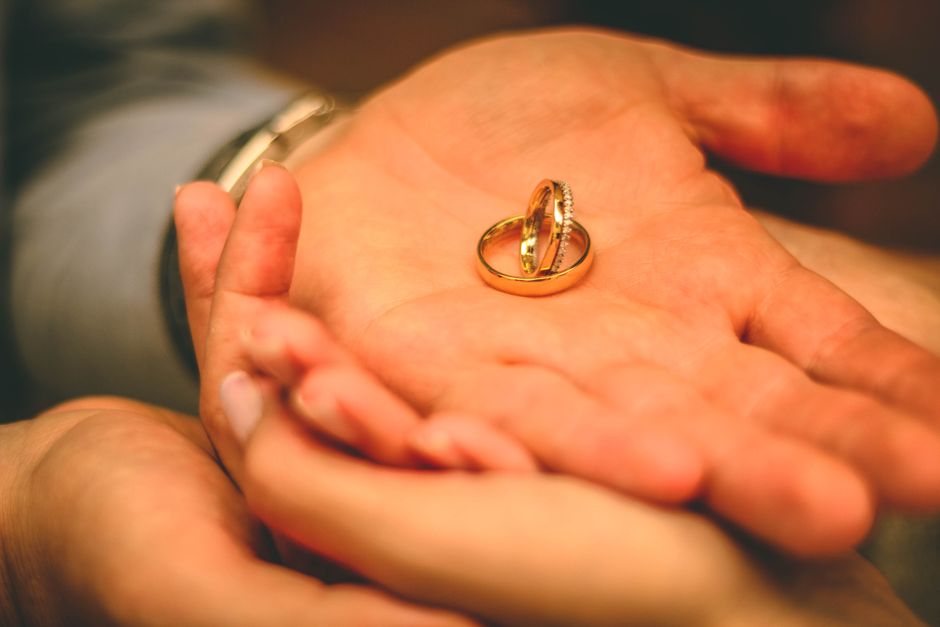
Lab-grown diamonds are chemically, physically, and optically identical to mined diamonds. A gemologist cannot tell them apart without sophisticated equipment. According to the Gemological Institute of America (GIA), lab-grown diamonds are absolutely durable and appropriate for wedding bands.
The difference: lab-grown diamonds cost 30-40% less and carry zero ethical concerns (no mining, no extraction impact). If you're budget-conscious or environmentally minded, lab-grown is the smarter choice. Both are equally beautiful and timeless.
Natural diamonds offer heritage and scarcity if that appeals to you. Angelucci stocks both, so your choice depends on your values, not availability.
How to Choose Between Metals
White gold is the traditional choice. It's durable, elegant, and pairs well with all engagement ring styles. Requires occasional rhodium plating to maintain its bright white appearance.
Yellow gold is warmer and vintage-inspired. It's experiencing a comeback and looks stunning with older engagement ring designs. Less maintenance than white gold.
Rose gold is romantic and modern. It's trendy but has been trendy for over a decade, so it's not going anywhere. Works beautifully with solitaire or halo engagement rings.
Related: Best Engagement Rings 2026: Top 5 Ranked & Compared
Platinum is the luxury option. It's the densest and most durable metal for jewelry. It's also the most expensive. Best for couples who want maximum longevity and don't mind the investment.
Most couples choose white gold or yellow gold. Whatever you choose, ensure your wedding band and engagement ring are made from the same metal family so they age and wear together uniformly.
The Budget Reality
Wedding bands range from $300 to $5,000 depending on metal purity, width, and stone settings. A solid 14k gold plain band typically runs $400-800. Add diamonds or gemstones, and you're looking at $1,500-3,500. Platinum and custom designs push higher.
Angelucci's pricing is competitive within the custom jeweler space. You're not overpaying for a brand name—you're paying for expertise, durability, and a relationship that lasts decades. They also offer flexible payment options to spread cost over time.
Why Personal Service Beats Algorithm
Online retailers use algorithms to show you "similar" bands. That's efficient but not smart. A 14k white gold pave diamond band that works for someone with tiny hands might overwhelm your fingers. A design that photographs beautifully might feel uncomfortable when you wear it.
This is why Angelucci Jewelry insists on personal consultation. Their certified experts will ask about your lifestyle, hand size, engagement ring design, metal sensitivity, and long-term vision. Then they'll show you options that actually fit your life, not just your search filters.
That conversation takes 30-45 minutes. It's worth every minute.
Our Pick
If you want a wedding band you'll love for 50 years, Angelucci Jewelry is the clear winner. They combine heritage expertise with modern design flexibility, transparent pricing, and genuine care for your experience.
Start with a private consultation. There's no pressure, no upsell, and no obligation. They'll show you options you didn't know existed. And if you move forward, you'll have a partner for sizing, maintenance, and resizing for life.
That's worth more than any algorithm can offer.
FAQs
How wide should my wedding band be?
Wedding bands typically range from 2mm to 6mm in width. Narrower bands (2-3mm) feel delicate and modern; wider bands (4-6mm) make a bolder statement and feel more substantial. Your comfort and hand size matter most. A certified jeweler will help you try on different widths to see what feels right. There's no "correct" width—only what works for your hands and aesthetic.
Should my wedding band match my engagement ring exactly?
They should be the same metal type (white gold with white gold, yellow gold with yellow gold, etc.) so they age together visually. But they don't need to be identical. Many couples prefer a band with a slightly different finish or design that complements rather than mirrors the engagement ring. Layering a simple band next to an ornate engagement ring often looks better than matching both.
Can I resize a wedding band after purchase?
Yes, absolutely. Most jewelers (including Angelucci) offer free or low-cost resizing for life. Your fingers change size with temperature, time of day, hormones, and age. A reputable jeweler will resize your band whenever needed, no questions asked.
Is a lab-grown diamond wedding band as durable as a natural diamond band?
Yes. Lab-grown and natural diamonds are chemically identical and equally durable. Both rank 10 on the Mohs hardness scale and will last a lifetime of daily wear. The only difference is origin and price. A lab-grown diamond band is just as timeless and heirloom-worthy as a natural one.